Composition Isn’t About Perfection — It’s About Intention
Think of composition as deciding what deserves attention and what doesn’t.
The moment you choose what to include and what to leave out, your images start feeling deliberate.
The moment you choose what to include and what to leave out, your images start feeling deliberate.
You don’t need to follow every rule.
You just need to understand what each rule does, so you can use it on purpose.
You just need to understand what each rule does, so you can use it on purpose.
1. Start With a Strong Subject
Your photo should have one thing you want people to notice first.
A person, a building, a leading line, a color — doesn’t matter.
A person, a building, a leading line, a color — doesn’t matter.
If you can’t answer “What’s my subject?” in one second, the viewer won’t know either.
Quick tip:
If the scene feels messy, move closer. It solves 90% of composition problems.
If the scene feels messy, move closer. It solves 90% of composition problems.
2. Rule of Thirds (Yes, It’s Basic — and Yes, It Works)
Divide your frame into a 3×3 grid. Place your subject on one of the intersections or along the lines. You instantly create balance without making things boring.
Try this today:
Put someone’s eyes on the top-left or top-right third.
Watch your portrait feel instantly more cinematic.
Put someone’s eyes on the top-left or top-right third.
Watch your portrait feel instantly more cinematic.
3. Leading Lines That Pull the Viewer In
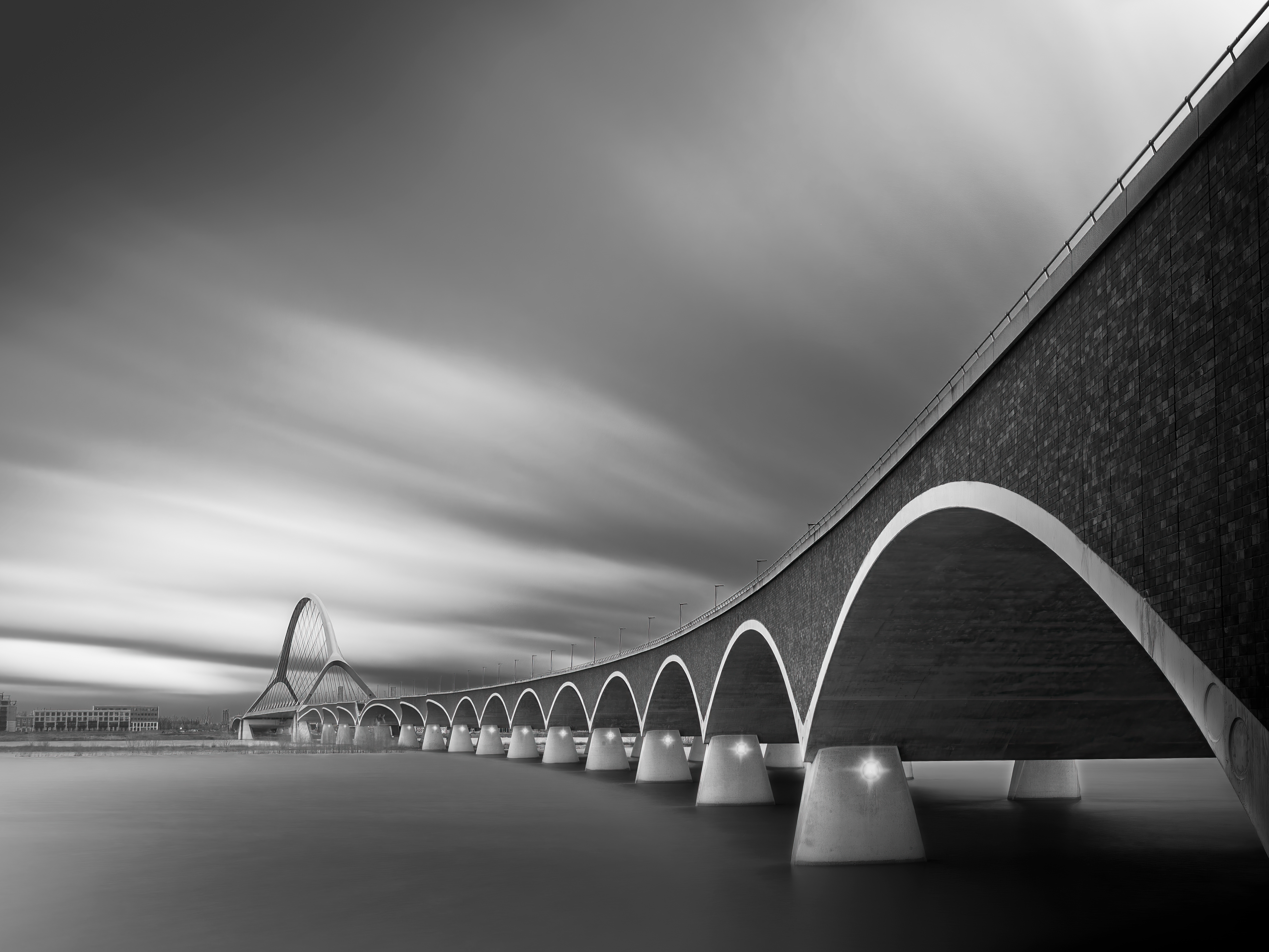
Use what’s already in the scene: roads, fences, shadows, rivers, buildings; to guide the eye straight to your subject. Leading lines create movement and direction, even in still images.
Pro move:
Start looking for lines before you raise your camera.
Start looking for lines before you raise your camera.
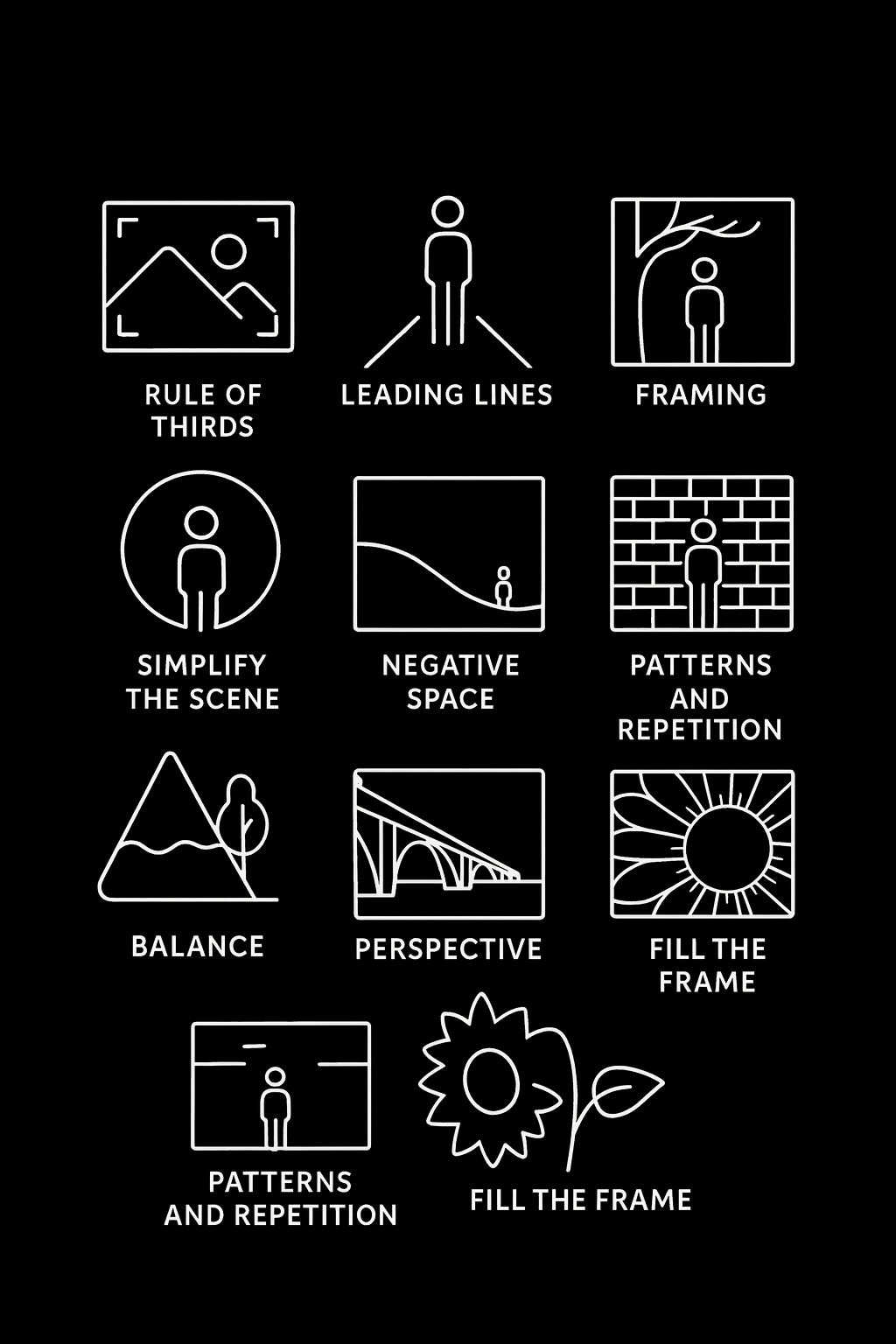
4. Framing: Surround Your Subject With Context
Tree branches, windows, doorways, arches — anything that creates a natural frame. This instantly adds depth and focus. It’s one of the easiest ways to make a shot feel intentional without changing anything technical.
5. Simplify the Scene — Ruthlessly
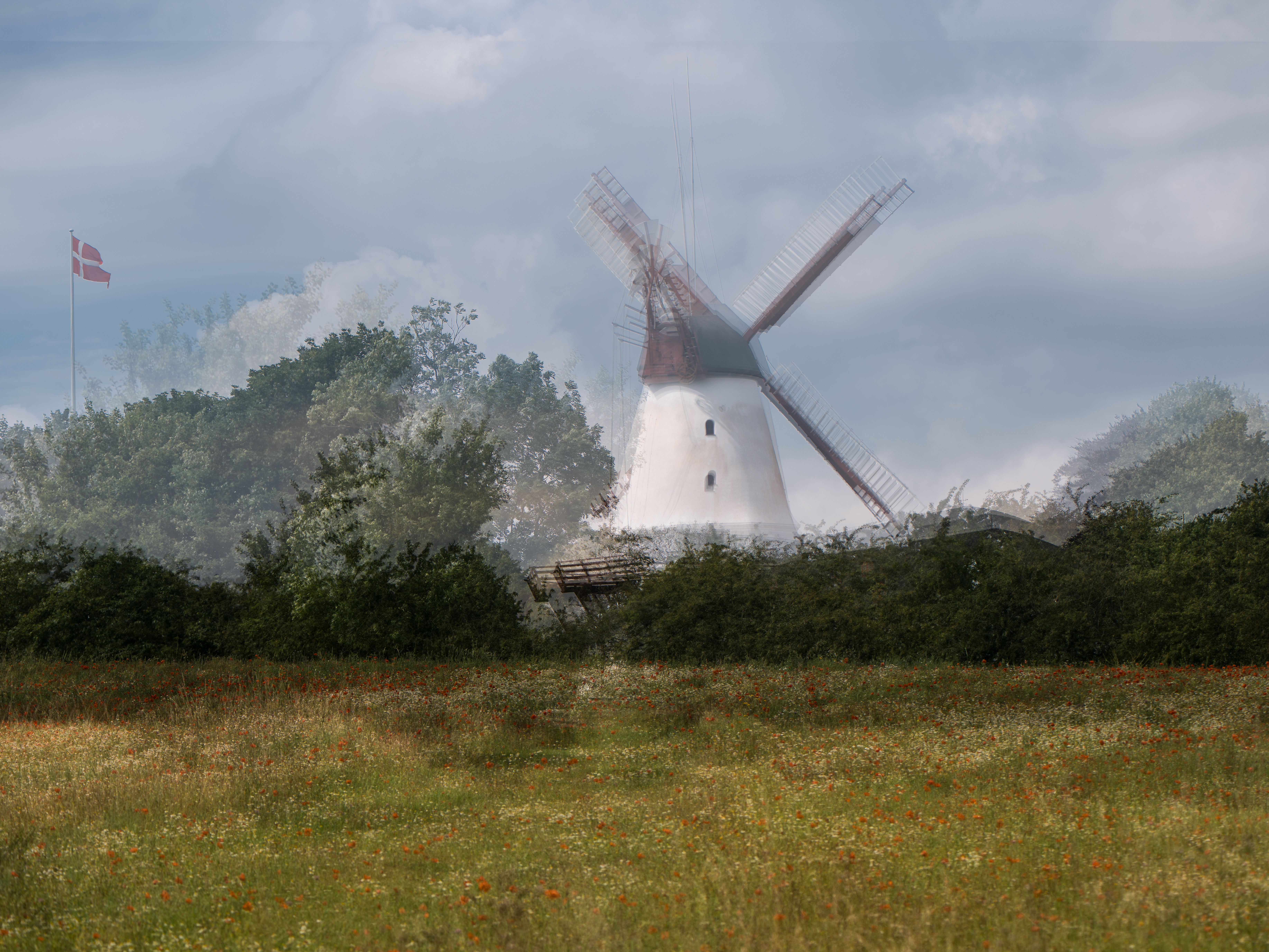
Most photos fall apart because there’s too much going on.
Here’s the secret:
Remove, remove, remove:
Remove, remove, remove:
Remove distracting elements.
Remove messy backgrounds.
Remove anything fighting for attention.
Remove messy backgrounds.
Remove anything fighting for attention.
Simplify the shot until your subject feels obvious.
6. Negative Space: When Less Really Is More
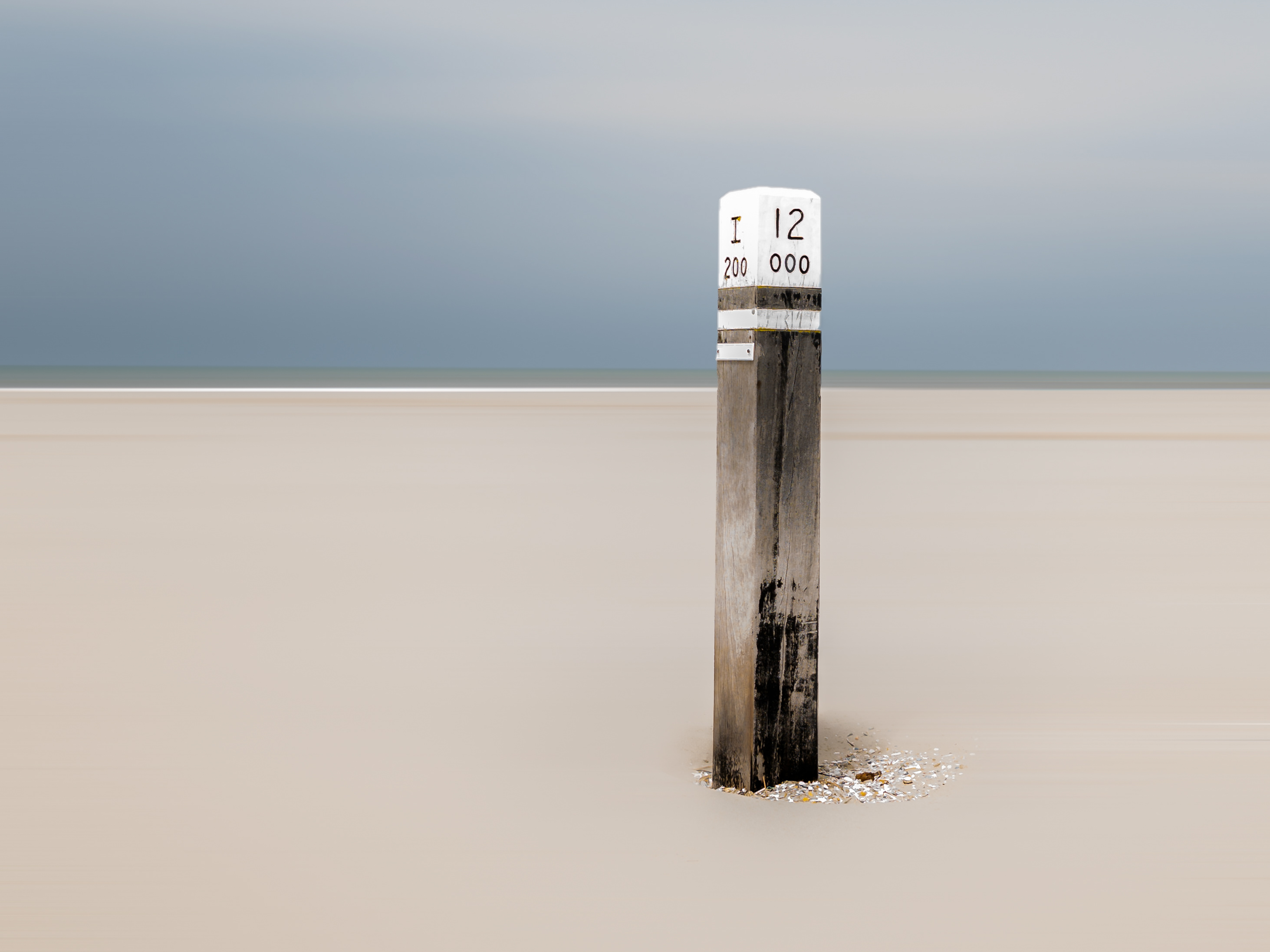
Give your subject room to breathe. A small subject in a big open space creates calm, drama, or even mystery. Negative space lets the viewer focus on emotion instead of clutter.
Try this:
Shoot someone against a plain wall or open sky. Let them take up only 20% of the frame.
Watch the mood shift instantly.
Shoot someone against a plain wall or open sky. Let them take up only 20% of the frame.
Watch the mood shift instantly.
7. Balance: Match the Weight, Not the Size
Visual weight isn’t about how big something is — it’s about how important it looks. Bright colors feel heavy. Dark areas feel lighter. People always draw attention. Patterns and text draw the eye.
Balance your subject with something on the opposite side of the frame so the image feels stable.
8. Perspective: Move More Than You Shoot
Beginners shoot everything from eye level. It’s the least interesting angle in the world.
Try:
- Shooting from the ground
- Shooting from above
- Shooting through objects
- Tilting the camera slightly
- Stepping three meters to the left
- Changing perspective transforms an average scene into something exciting.
9. Fill the Frame (When the Story Deserves It)
When your subject is powerful — emotion, texture, detail — get close and let it take over.
No distractions. No wasted space. Just impact.
Works beautifully for portraits, wildlife, architecture details, and street shots.
10. Patterns, Colors, and Repetition
Humans love order.
Patterns and colors naturally draw the eye.
Patterns and colors naturally draw the eye.
Look for:
- Repeating shapes
- Symmetry
- Rhythm
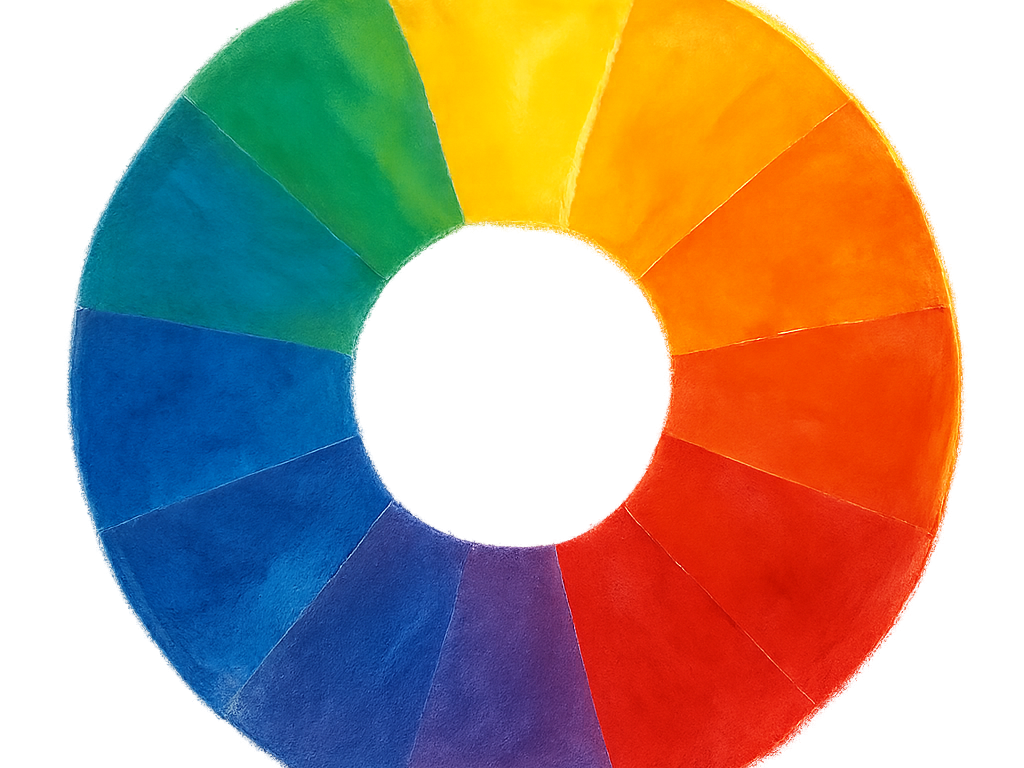
- Color contrast
When you find a pattern, place your subject breaking it; instant storytelling. A simple composition workflow that always works.
When you’re on location, try this:
1. Find your subject.
2. Eliminate distractions.
3. Choose an angle or perspective that adds interest.
4. Use one rule (any rule) to give structure.
Don’t try to use every rule at once — pick one and commit.
Composition is where your style begins.
It’s not about rules — it’s about how you see the world.
It’s not about rules — it’s about how you see the world.
Use these tools, break them when you want, and build a visual style that actually feels like you.